
The Unofficial Mayor Of Every Open Play Group
Every open play group eventually elects a mayor. The election is never held. The position is never discussed. The mayor simply appears.

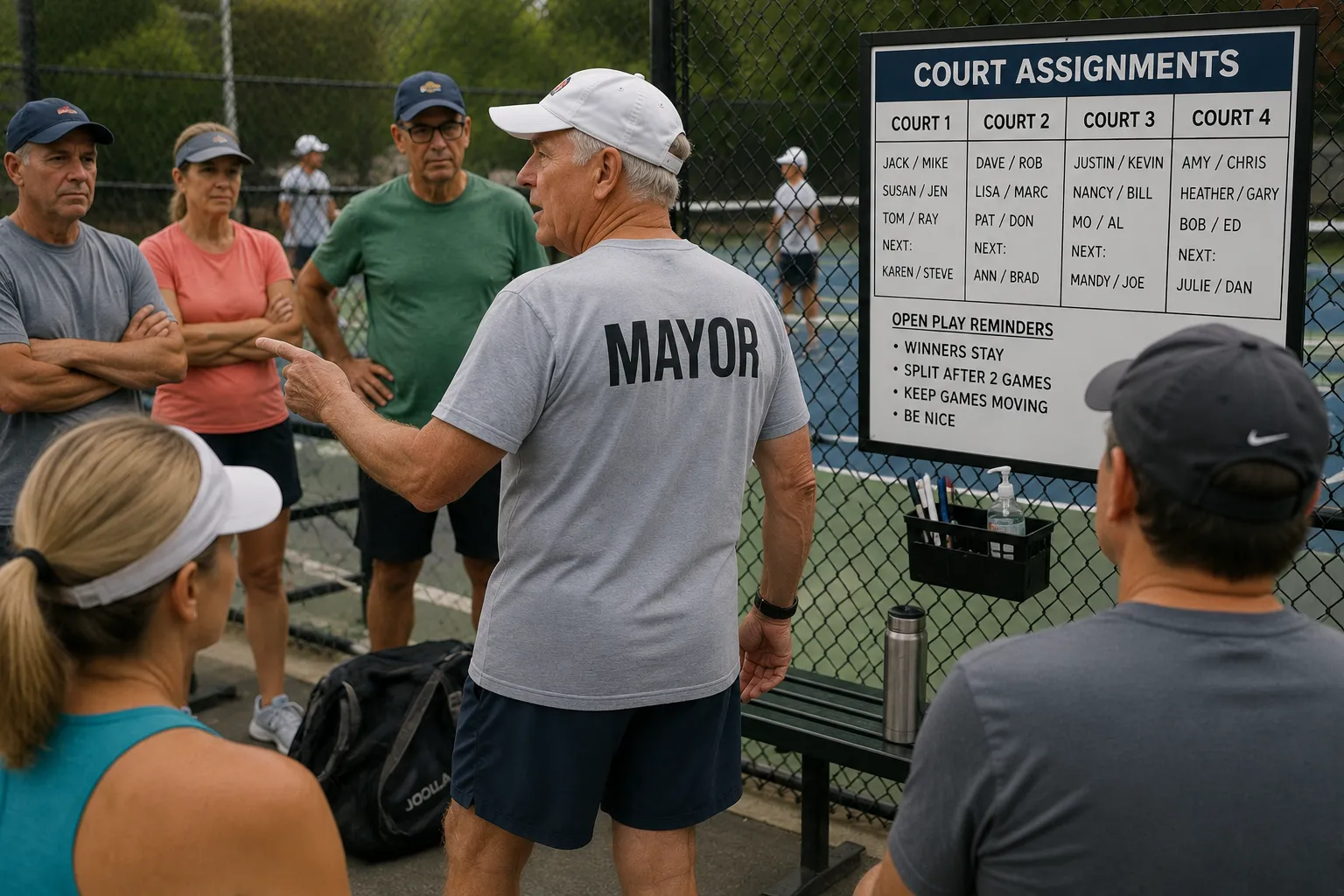
Every open play group eventually elects a mayor.
The election is never held.
The position is never discussed.
The mayor simply appears.
Usually they’re retired.
Usually they’re there more often than the employees.
And usually they’ve developed strong opinions about things nobody realized required opinions.
The mayor knows:
- who should be playing on which court,
- which players are “moving up nicely,”
- and why Court 2 has been playing slower lately.
The mayor does not run the facility.
The mayor operates at a higher level.
When new players arrive, the mayor greets them.
When arguments occur, the mayor appears.
When someone attempts to reorganize paddle stacking, the mayor becomes visible from surprising distances.
The remarkable thing is that every group accepts this arrangement.
Nobody voted for the mayor.
Nobody can remove the mayor.
The mayor simply accumulates authority through repeated attendance.
Most mayors are harmless.
Some are genuinely helpful.
A few have been known to issue unofficial court assignments with enough confidence that players follow them automatically.
The position carries no benefits.
It carries no salary.
It carries no actual power.
Which may explain why so many people want it.
The easiest way to identify the mayor is simple.
Ask who runs open play.
The mayor will immediately explain that nobody does.